Hey,
It’s Michał with a bunch of news and insights from React Native community and Callstack Incubator. January and early February of 2026 was packed, so brace yourselves (and your lobsters 🦞) for a hilly ride.
Let’s go!
Community highlights
- React Native 0.84 – Hermes V1 by Default: This release makes Hermes V1 the default JavaScript engine, bringing significant performance improvements to all React Native apps with 40% faster runtime and up to 8% faster TTI. The release also continues on removing the Legacy Architecture on both iOS and Android, and ships with precompiled iOS binaries by default.
- Expo SDK 55 beta is now available: this release comes with React Native 0.83.1 and unlocking React 19.2 new APIs, including Activity and DOM Node, Hermes bytecode diffing opt-in flag, for ~75% smaller incremental OTA updates, AI tooling, Expo Router 7, Expo brownfield integration, widgets, and many more
- React Native for HarmonyOS Next now official: our friends at Software Mansion have been cooperating with Huawei for a few years now to deliver new React Native out-of-tree platform: HarmonOS Next. It’s a fairly new operating system currently only available in China with over 27M users. You can build React Native apps for them with full native experience. What a time to build!
- React Native Windows 0.81 and React Native macOS 0.81 - Speaking of out-of-tree platforms, Microsoft released new versions for macOS and Windows. Most importantly, they ship with New Architecture by default.
Callstack Incubator highlights
The main theme of the month is: agents.
Agent Skills
When we got back from our winter season breaks in new year, we learned that it’s 2026 and we’re not doing software development as we did before. We’re now doing agentic development. Both Claude Code and Codex experienced a step change improvement in December, unlocking unprecedented productivity. Of course we hopped on this train as quickly as possible—with our first contribution being nothing else than making our bestselling (lol, it’s free) guide into a set of reusable skills for coding agents. That’s right, a whole book turned into instructions for agents on how to improve runtime, and ahead-of-time performance of your apps available with a single command:
npx skills add callstackincubator/agent-skills
And later on, we figured that it would be great if everyone had access to better upgrading experience of React Native apps. So we ran a few interviews internally with Callstack Engineers and codified our learnings from recent React Native upgrades for our biggest clients. Turns out most of the challenges are around dependencies not aligning or outdated/abandoned, React 19, testing, or re-applying patches. So we got it all together and published upgrading-react-native skill under the same agent-skills repository. Give it a try when you’re upgrading to RN 0.84—chances are your agent can do it for you.
Agent Device
Inspired by Vercel’s excellent agent-browser we’ve noticed an opportunity for a CLI tool to control iOS and Android devices in an agent-optimized way: meet agent-device. It’s a lightweight, token-efficient CLI that your favorite AI agents can use as “eyes” and “hands” when developing mobile apps. Give it a try, and let us know your experiences!
This inspired Piotr, Callstack engineer not associated with Incubator, but OSS enthusiast, to create agent-react-devtools so that your agent can easily inspect performance issues you can find (using react-native-best-practices skill) with React and React Native DevTools and fix them in a single iteration (and then test it live using agent-device). So much potential here.
Rozenite and DevTools
Szymon is experimenting with MCP for Rozenite (our plugin system for React Native DevTools) that exposes tool calls to control your app state through agents. In the linked demo, the agent controls app’s storage (MMKV), listing available keys and changing values, while it updates live on the screen. This makes debugging so much easier for agents!
Voltra
Our Live Activity and Widgets library, Voltra, now supports creating widgets for Android. And in the latest v1.2 release, there’s a new iOS layout engine (hello Flexbox), improved Expo support, and enhancements that give developers more control over widgets and media.
Storybook
Danny is not (yet?) in Callstack Incubator but, boy, he’s shipping. Recently created a set of skills for agents to efficiently use Storybook for React Native. Now agents can setup storybook for you and write stories like pros.
React Navigation
Satya is busy with making React Navigation 8 stable and shipping new libraries and functionality as a part of it. What’s coming? Automatic deep links out of the box, support for Material Symbols on Android in Native Tabs, SFSymbols on iOS + Material Symbols on Android for JS Tabs, and reworked preloading screens to remove restrictions. Overall your apps will feel even more native than before. Exciting!
CSS calc in React Native
Kamil is steadily improving CSS support in React Native, this time he took calc for a spin and somehow made it work. Initial implementation was regressing Yoga memory footprint by 3x, so he worked relentlessly on finding better solutions, and thankfully now he came up with one that’s neutral for performance.
The PR for Yoga engine is here: https://github.com/facebook/yoga/pull/1874 – give it a 👍 if you want to see CSS calc in React Native soon!
Harness
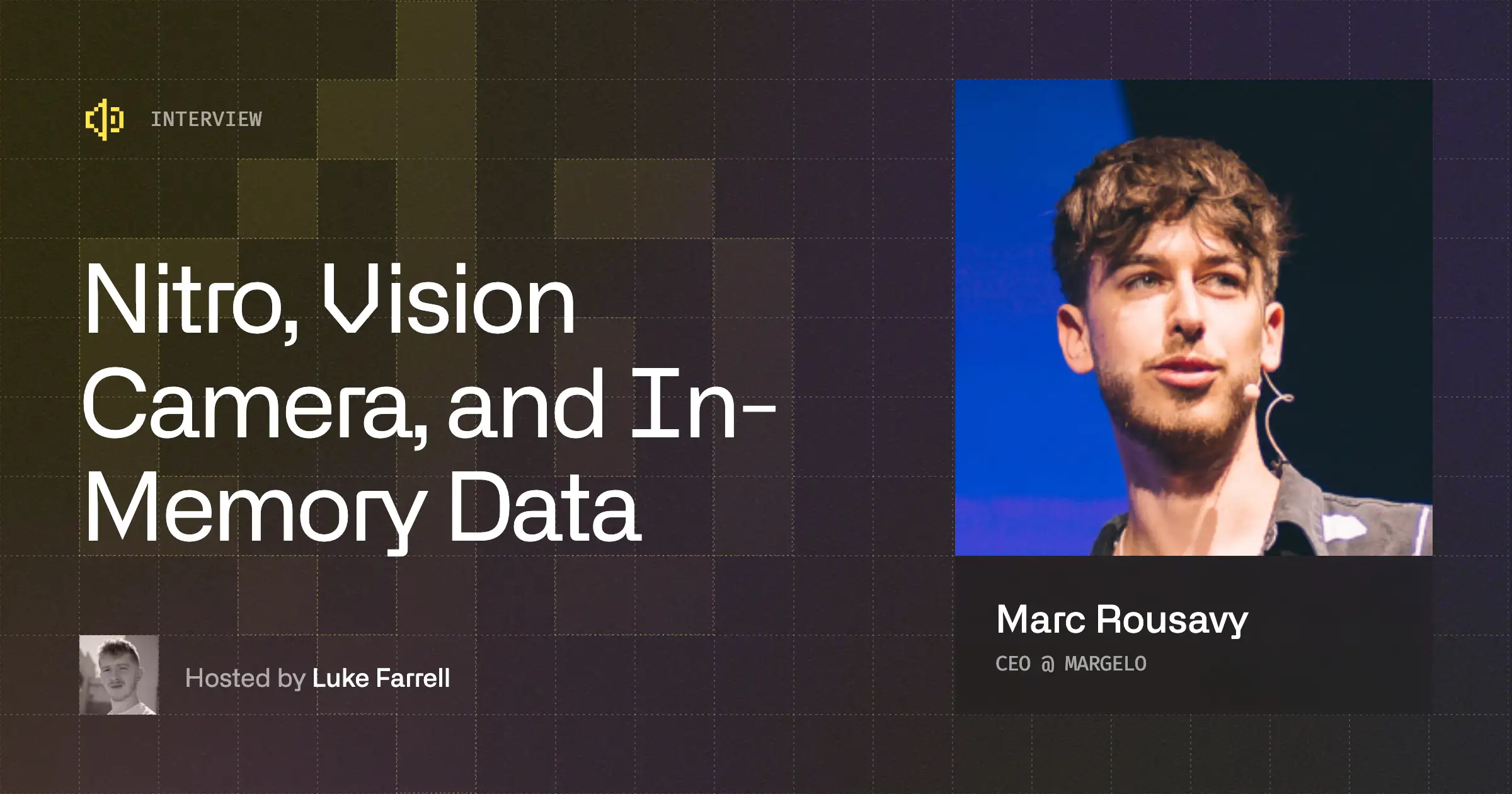
Marc is using Harness to test both Nitro and react-native-mmkv libraries and ship them faster. Be like Marc.
Blog
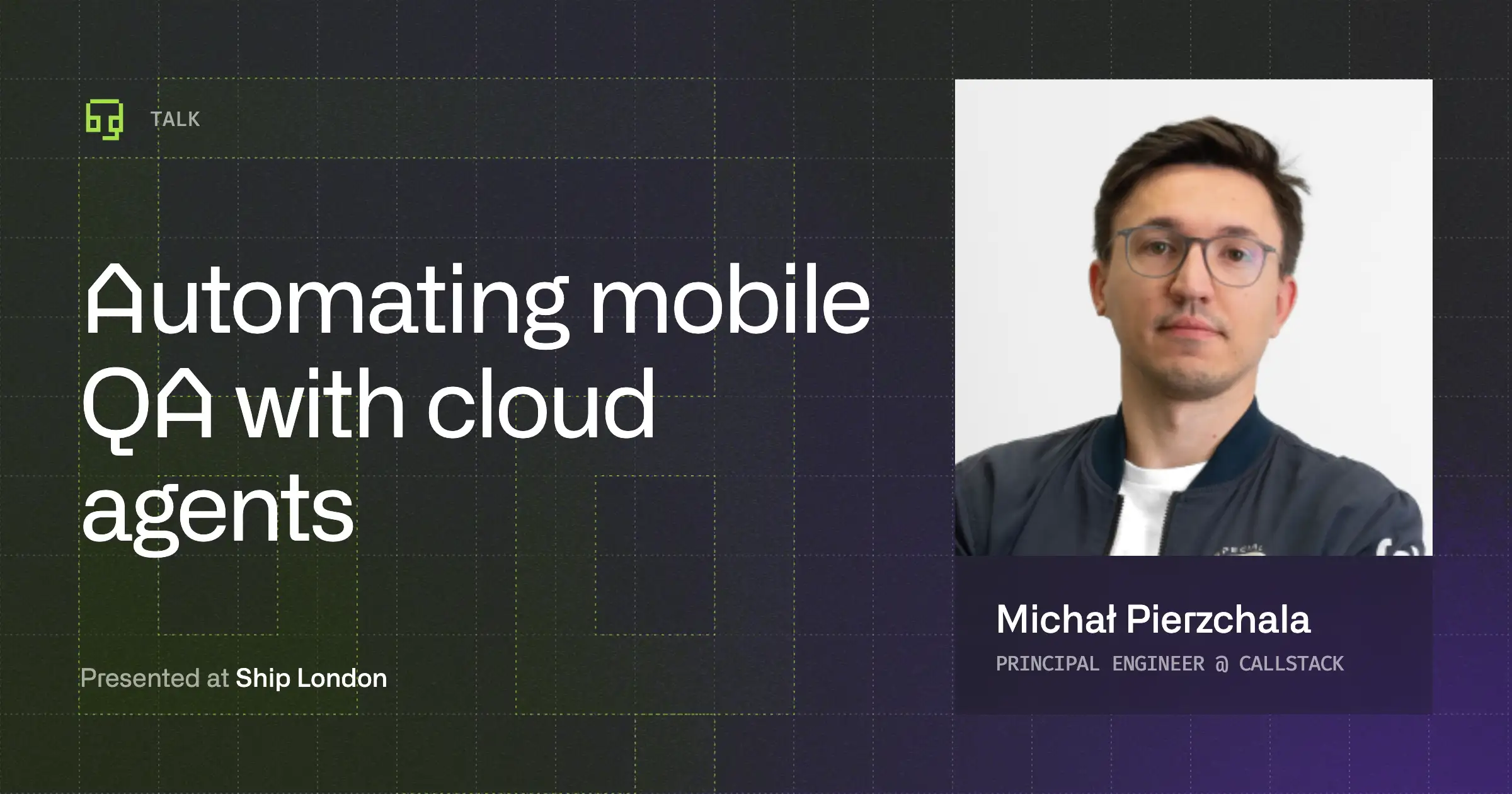
Agent Device: iOS & Android Automation for AI Agents by Michał Pierzchała: This article introduces agent-device, a new CLI for automating mobile UI workflows with AI agents. It explains what the tool is, how it helps developers with token-efficient snapshots and repeatable interactions, and why Callstack is building it to bridge exploratory agent behavior with deterministic replay across iOS and Android.
A Practical Guide to React Native Monorepo With Yarn Workspaces by Nazar Sydiaha: This guide walks through setting up a React Native monorepo that supports both mobile and web apps using Yarn workspaces. You’ll configure Metro, Android and iOS builds, TypeScript, and shared packages so your apps can reuse UI and logic without duplication.
Announcing AI SDK Profiler for React Native by Mike Grabowski: We introduced the AI SDK Profiler plugin for Rozenite DevTools. It captures OpenTelemetry spans emitted by the Vercel AI SDK, surfaces prompts, outputs, metadata, and latency, and works with any provider, on-device or cloud.
Bringing CSS Clipping to React Native by Kamil Paradowski: CSS Clip-path makes it easy to create non-rectangular UI elements on the web, but React Native does not support it out of the box. This article walks through what adding Clip-Path support would involve, following the flow from JavaScript styles through React Native’s C++ core and New Architecture to native rendering on iOS and Android. It looks at how a new style property would be parsed, represented in Fabric, and applied at the platform level, using Core Animation masks on iOS and canvas clipping on Android, to show why supporting a single CSS feature requires coordinated changes across the entire rendering pipeline.
Introducing Brownie: Type-Safe Shared State for React Native Brownfield Apps by Oskar Kwaśniewski: Brownie is a new shared state library designed for React Native brownfield applications. It addresses a common pain point in mixed native and React Native codebases: keeping state consistent without building and maintaining custom Turbo Modules. With Brownie, teams define their state once in TypeScript and generate matching native types automatically. The article introduces the core ideas, shows how the workflow fits into real brownfield apps, and outlines what’s included in the iOS alpha release.
Announcing: React Native Best Practices for AI Agents by Michał Pierzchała: We’re publishing react-native-best-practices: a structured set of skills derived from The Ultimate Guide to React Native Optimization, designed for AI coding agents working on React Native and Expo apps. The repo covers practical techniques across JavaScript, native iOS/Android, and bundling. All contribute to the metrics that matter: FPS and TTI.
Podcast, videos, and talks
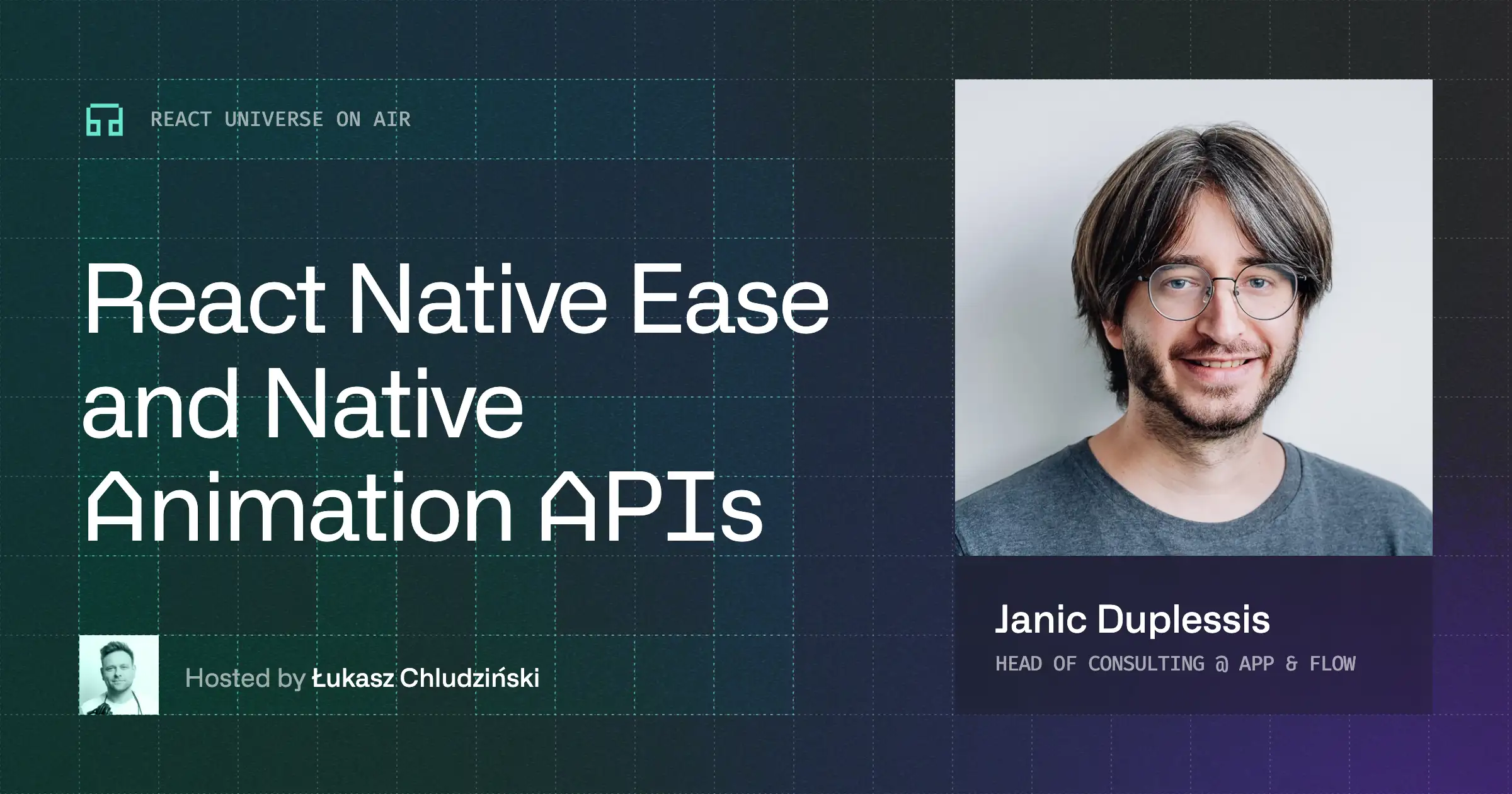
React Universe On Air From Teddy Bears to Voice Agents: Kraen Hansen on Voice AI, Local-First & App Security: What happens when you combine voice agents and teddy bears? A hands-on look at local-first systems, voice AI, and security lessons from poking real apps.
React Universe On Air Building v0 iOS and Fixing React Native Along the Way: A technical look at building v0 mobile with React Native and Expo, covering iOS-first decisions, native modules, and fixes pushed to React Native core. Featuring Fernando Rojo, Szymon Rybczak, and Oskar Kwaśniewski.
How to Run Any LLM On-Device With React Native by Szymon Rybczak:** In this talk, Szymon will show how to run LLMs directly inside React Native apps using an AI SDK that provides a powerful abstraction layer to simplify building AI applications. Join him as he explores react-native-ai, a library that enables local LLM execution.
How I Hacked React Native DevTools (And Built a Plugin Framework by Szymon Chmal:** Learn how React Native DevTools work under the hood, and how to inject custom plugins with clean hooks and no forks.
Live streams
- React And React Native: The Year Kick-Off recording
- React and React Native Weekly Breakdown recording
- Exploring Skills in Claude: A Live Walkthrough recording & thread
- Storybook Explained: From Basics to Advanced Workflows recording & thread
- Sparkling: A New Framework for Lynx recording recording
Upcoming events: Callstack x Vercel AI SDK Meetup
On Wednesday, March 4, 2026, together with Vercel, we’re hosting a developer-first meetup in Wrocław, focused on shipping AI-powered apps to production.
Join us for an evening on moving beyond AI demos and prototypes. We’ll dig into secure AI code execution, durable agent architectures, and what “vibe-coding” looks like when you’re building a real commerce product, all using the Vercel AI SDK, Workflows, and Claude.Sing up here to save your spot.
That’s it for the January edition. February is already shaping up to be interesting.
We’ll be back next month with more updates, experiments, and lessons from the field.
See you then.
Michał
Your next read or watch starts here
Stay up to date with our latest insights on React, React Native, and cross-platform development from the people who build the technology and scale with it daily.