React and React Native in 2026: Architecture, Nitro, and What’s Next
React and React Native in 2026: Architecture, Nitro, and What’s Next
New architecture adoption, Nitro modules, React Strict DOM, Hermes v1, and ecosystem shifts shaping React and React Native in 2026.
React and React Native in 2026: Architecture, Nitro, and What’s Next



A Year Defined by Architecture
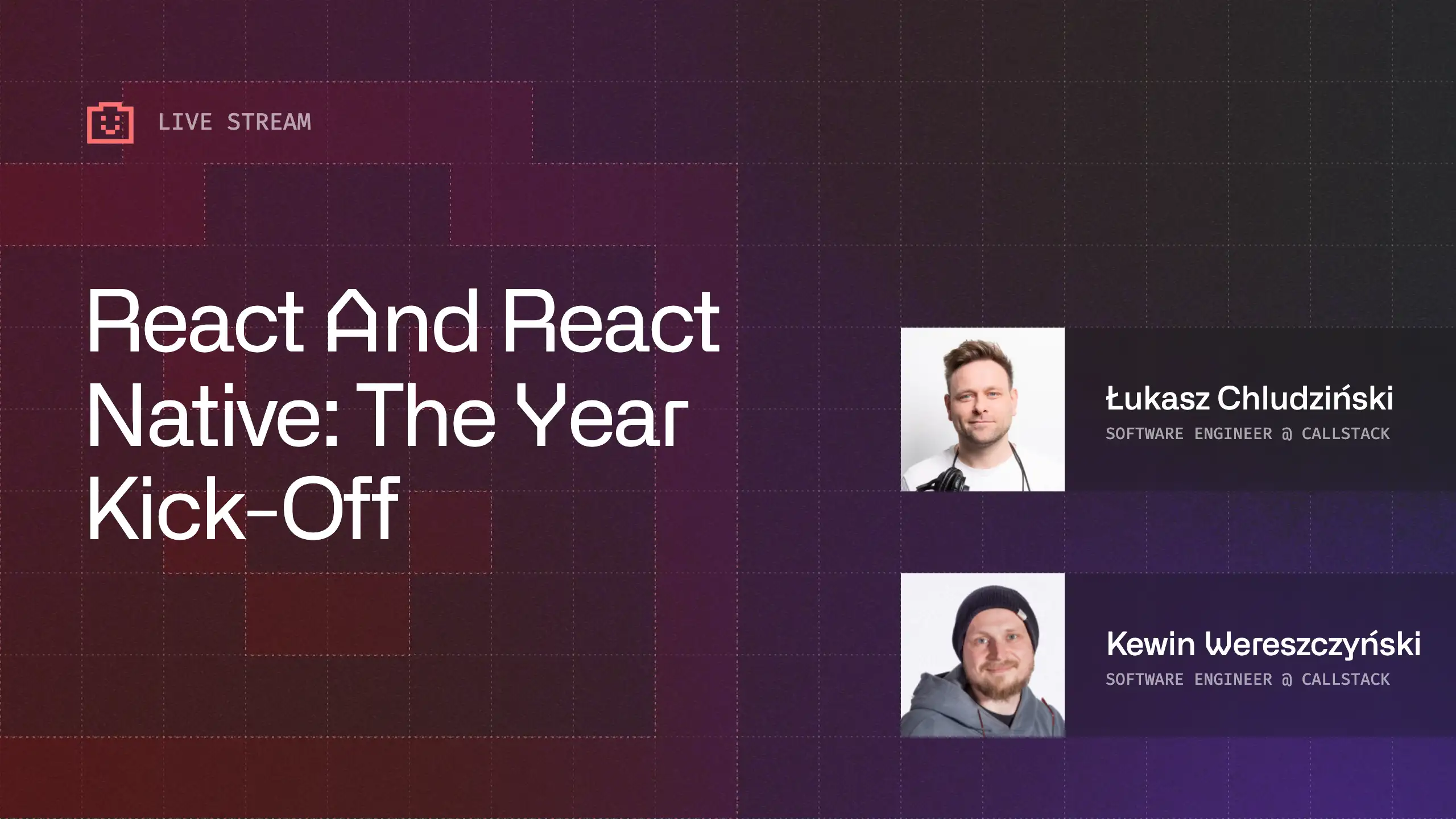
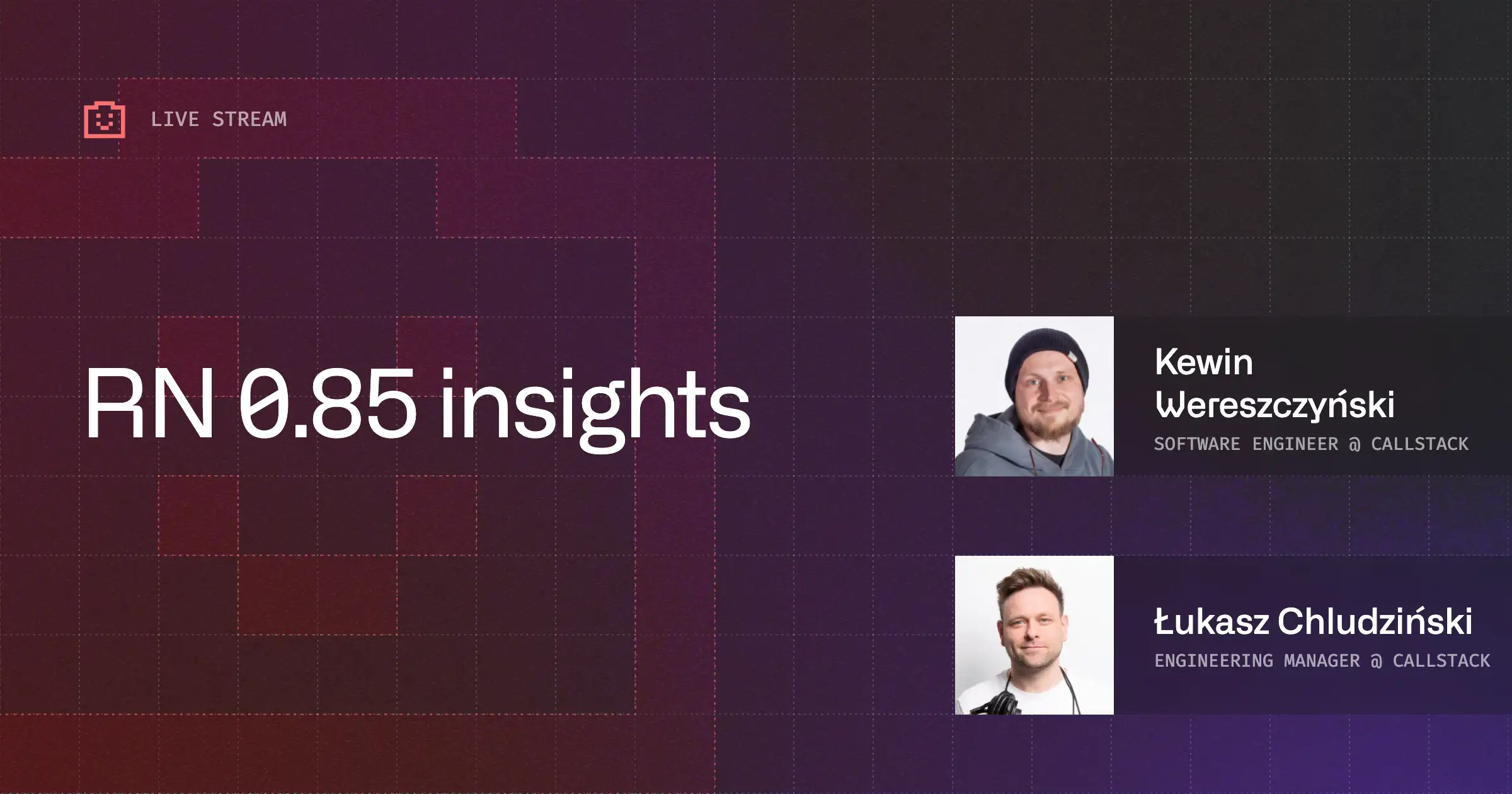
Kewin Wereszczyński and Łukasz Chludziński opened the year by examining where React and React Native actually stand after a transformative 2025.
The biggest shift remains the new architecture. With Fabric, Turbo Modules, codegen, and Hermes v1 moving into mainstream adoption, the ecosystem is no longer experimenting at the edges. Core libraries such as Reanimated, Nitro-based modules, and performance-focused tooling are now built with the new architecture in mind. Delaying migration increasingly means losing access to modern libraries.
At the same time, both hosts emphasized an important nuance: the new architecture doesn’t magically improve performance on its own. It unlocks possibilities. Real gains come from what’s built on top of it: concurrent rendering, worklets, GPU-powered solutions, and deeper threading control.
Nitro Modules and the Performance Shift
A recurring theme throughout the stream was the rise of Nitro modules. More libraries are rebuilding around Nitro to reduce JS-to-native overhead and improve performance-critical paths.
This sparked a broader discussion about threading and future optimizations. As React Native applications start integrating on-device AI models and GPU-heavy features, proper multi-threading becomes less of a niche topic and more of a baseline requirement. The expectation for 2026 is clear: performance-sensitive features will move closer to native-level execution without abandoning React’s developer ergonomics.
The ecosystem appears to be entering a phase where architectural foundations are stable enough to support more ambitious experiments.
React Strict DOM and the Web Alignment
Another major shift discussed was the growing importance of React Strict DOM. Rather than forcing web developers to adopt React Native primitives, the ecosystem is moving toward deeper alignment with web standards.
React Strict DOM allows developers to write with familiar web syntax while targeting native platforms underneath. This reduces friction for teams maintaining both web and mobile products and strengthens the “write once, run everywhere” narrative.
The move also aligns React Native more closely with web APIs, improving cross-platform parity without relying solely on React Native Web’s transpilation layer.
Tooling, Security, and Ecosystem Maturity
Tooling continues to evolve rapidly:
- Voltra 1.0 launched, bringing React-driven Live Activities and widgets.
- Hermes v1 is becoming default in upcoming React Native releases.
- New security scanning tools are emerging for React Native and Expo projects.
- Radon Pro expands IDE-level support tailored for React Native workflows.
The React Foundation announcement and broader ecosystem coordination signal a push toward governance stability. At the same time, innovation hasn’t slowed. HarmonyOS support for React Native and continued TV platform growth show expansion beyond traditional mobile surfaces.
The overall sentiment: React Native is no longer fighting for legitimacy. It’s refining, optimizing, and expanding.
AI and the Developer Experience Debate
The conversation also explored AI’s growing role in engineering workflows. Rather than focusing on hype, the discussion centered on long-term impact.
AI is accelerating development, lowering barriers to entry, and abstracting complexity. The open question for 2026 isn’t whether AI will be used, it’s how developers maintain deep technical understanding while leveraging increasingly powerful automation tools.
The conclusion was pragmatic: foundational knowledge still matters. Architecture decisions, performance trade-offs, and system design cannot be fully delegated.
Looking Ahead
2026 is shaping up to be less about radical reinvention and more about consolidation and expansion. The foundations are in place. Libraries are adapting. Platforms are broadening.
The next phase will be defined by how well teams leverage the new architecture, embrace cross-platform alignment, and integrate emerging performance and AI capabilities without sacrificing clarity.
Watch the full recording to dive deeper into the ecosystem trends and join us next week as we continue tracking React and React Native throughout 2026.
React and React Native in 2026: Architecture, Nitro, and What’s Next
New architecture adoption, Nitro modules, React Strict DOM, Hermes v1, and ecosystem shifts shaping React and React Native in 2026.

Learn more about React Native
Here's everything we published recently on this topic.










React Native Performance Optimization
Improve React Native apps speed and efficiency through targeted performance enhancements.
C++ Library Integration for React Native
Wrap existing C-compatible libraries for React Native with type-safe JavaScript APIs.
Shared Native Core for Cross-Platform Apps
Implement business logic once in C++ or Rust and run it across mobile, web, desktop, and TV.
Custom High-Performance Renderers
Build custom-rendered screens with WebGPU, Skia, or Filament for 60fps, 3D, and pixel-perfect UX.