OpenClaw, Hermes Node and the State of AI Tooling
OpenClaw, Hermes Node and the State of AI Tooling
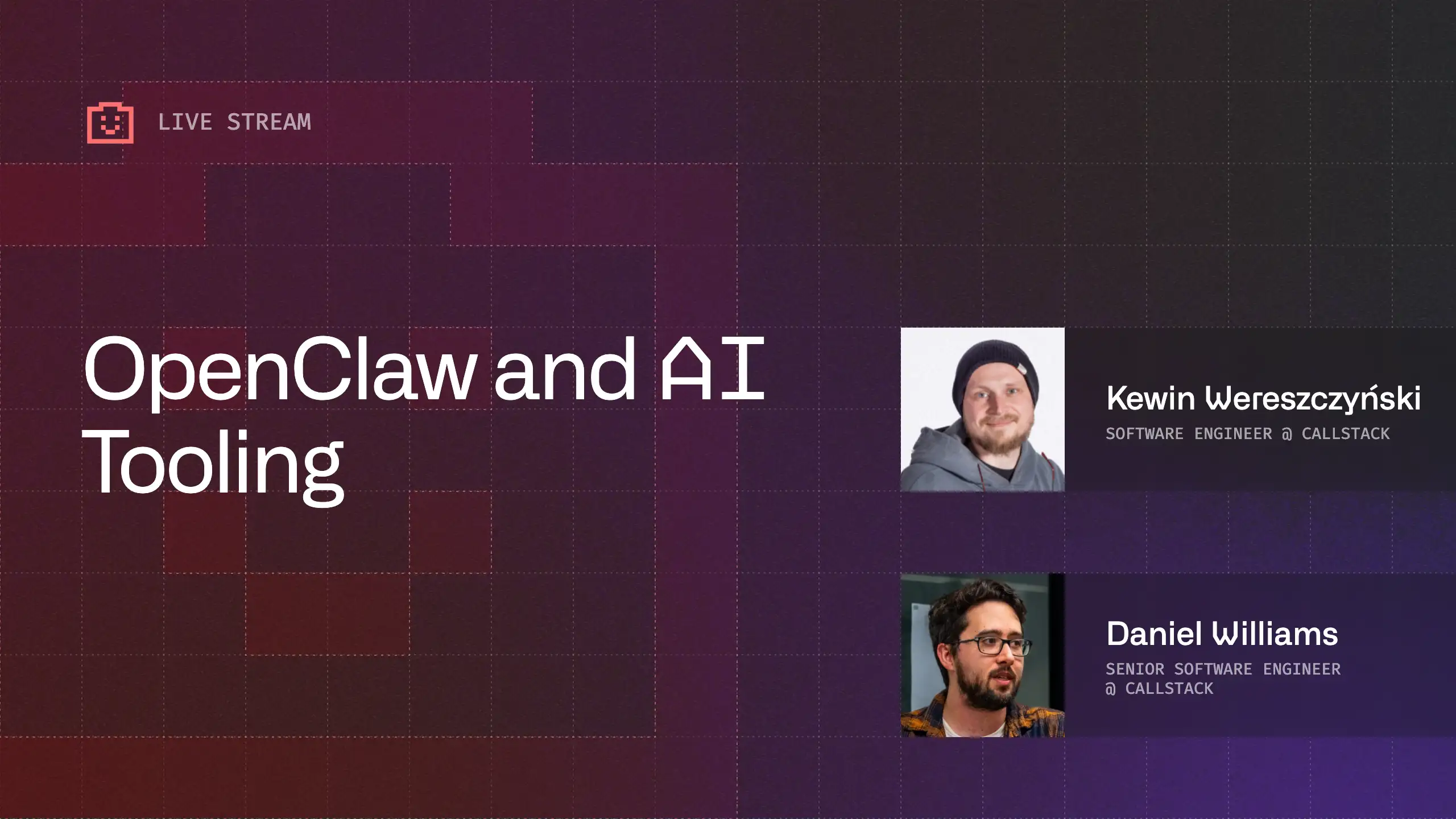
Kewin Wereszczyński and Daniel Williams discuss OpenClaw, Hermes Node, Markdown rendering, AI coding tools and the current AI landscape
OpenClaw, Hermes Node and the State of AI Tooling



Hermes Node and Engine-Level Changes
The conversation covered the Hermes team’s announcement of Hermes Node, a CLI version of Hermes compatible with the Node.js API. The discussion focused on how Hermes Node can act as a compatibility layer, enabling original Node.js module implementations to work without rewrites.
The hosts highlighted potential use cases, including more accurate test environments aligned with how apps actually run, and experimentation with compiling JavaScript to Hermes bytecode. The broader implication discussed was experimentation within the React Native ecosystem and how engine-level improvements may affect performance and tooling.
Markdown Rendering in React Native
The hosts discussed recent work around native Markdown rendering, including efforts to move parsing and AST generation to the native side for improved performance.
They compared JavaScript-based renderers with native implementations and addressed performance tradeoffs, especially in chat-heavy interfaces where Markdown content may include images and complex layouts. The need for a well-maintained Markdown renderer in the ecosystem was emphasized, along with challenges related to dependency management and minimizing native dependencies in libraries.
OpenClaw Setup and Security Considerations
A significant portion of the discussion focused on setting up OpenClaw and navigating its onboarding flow. Topics included:
- API key configuration and authentication
- Discord bot integration
- Gateway service setup
- Sandboxed versus full system access
- Tool permissions and security boundaries
The conversation emphasized caution around enabling tools, granting access to sensitive integrations such as email or password managers, and understanding prompt injection risks. The hosts discussed how OpenClaw can operate as a persistent assistant capable of executing tasks, but stressed the importance of controlled environments and limited permissions.
AI Coding Tools and Developer Workflow
The discussion broadened to AI-assisted development tools including Cursor, Claude Code, and Codex. Key themes included:
- Using AI as a second pair of eyes for pull requests
- Prototyping side projects quickly
- Running commands with explicit approval
- Managing multiple AI threads across projects
- Differences between terminal-based interfaces and desktop applications
Daniel described shifting from Cursor to Claude Code and Codex, noting similarities in workflow and differences in UI organization. The conversation also touched on balancing productivity gains with skepticism toward hype.
AI Hype and Practical Adoption
The hosts addressed frustration around exaggerated claims about AI replacing developers. Instead, they framed AI tools as productivity multipliers rather than job replacements.
They discussed the importance of removing hype from the conversation and focusing on practical, grounded understanding of tools, models and workflows. Plans were mentioned to explore a structured overview of the current AI landscape, including models, IDE integrations, workflows and best practices.
Watch the full recording to explore the full discussion on OpenClaw, Hermes Node and AI coding tools.
OpenClaw, Hermes Node and the State of AI Tooling
Kewin Wereszczyński and Daniel Williams discuss OpenClaw, Hermes Node, Markdown rendering, AI coding tools and the current AI landscape

Learn more about React Native
Here's everything we published recently on this topic.




React Native Performance Optimization
Improve React Native apps speed and efficiency through targeted performance enhancements.
C++ Library Integration for React Native
Wrap existing C-compatible libraries for React Native with type-safe JavaScript APIs.
Shared Native Core for Cross-Platform Apps
Implement business logic once in C++ or Rust and run it across mobile, web, desktop, and TV.
Custom High-Performance Renderers
Build custom-rendered screens with WebGPU, Skia, or Filament for 60fps, 3D, and pixel-perfect UX.