In 2025, Apple's on-device model access came to React Native. It let apps call Apple's small local model for short generation, structured output, and tool calling without downloading a model or sending every request to a server.
At WWDC 2026, Apple expanded that surface. Apple Foundation models now run on-device and through Private Cloud Compute, Foundation Models gains image input, and Core AI gives apps a native path for their own local models.
In this article, you’ll learn what’s new and what we’re bringing to React Native in the coming months.
What Apple announced
WWDC 2026 adds five changes that matter for on-device AI:
- Apple Foundation models now run on-device and through Private Cloud Compute. (source)
- Apple is adding a second, more capable on-device model for higher-end iPhone, iPad, and Mac systems. (source)
- The advanced local model supports text, image understanding, and speech. (source)
- Foundation Models now accepts image input, supports custom skills, and can call server-running models through the same Swift API. (source)
- Core AI gives developers a native framework for running other local models with Apple silicon. (source)
Apple is making model routing part of the OS
Apple described Apple Foundation models as the core of Apple Intelligence. It also said the new models were created with technologies behind Google's Gemini family, then adapted for Apple hardware and Private Cloud Compute.
On-device models are for fast, private work that can run with limited context. Private Cloud Compute is the path when the task needs more capacity, longer context, or heavier reasoning.
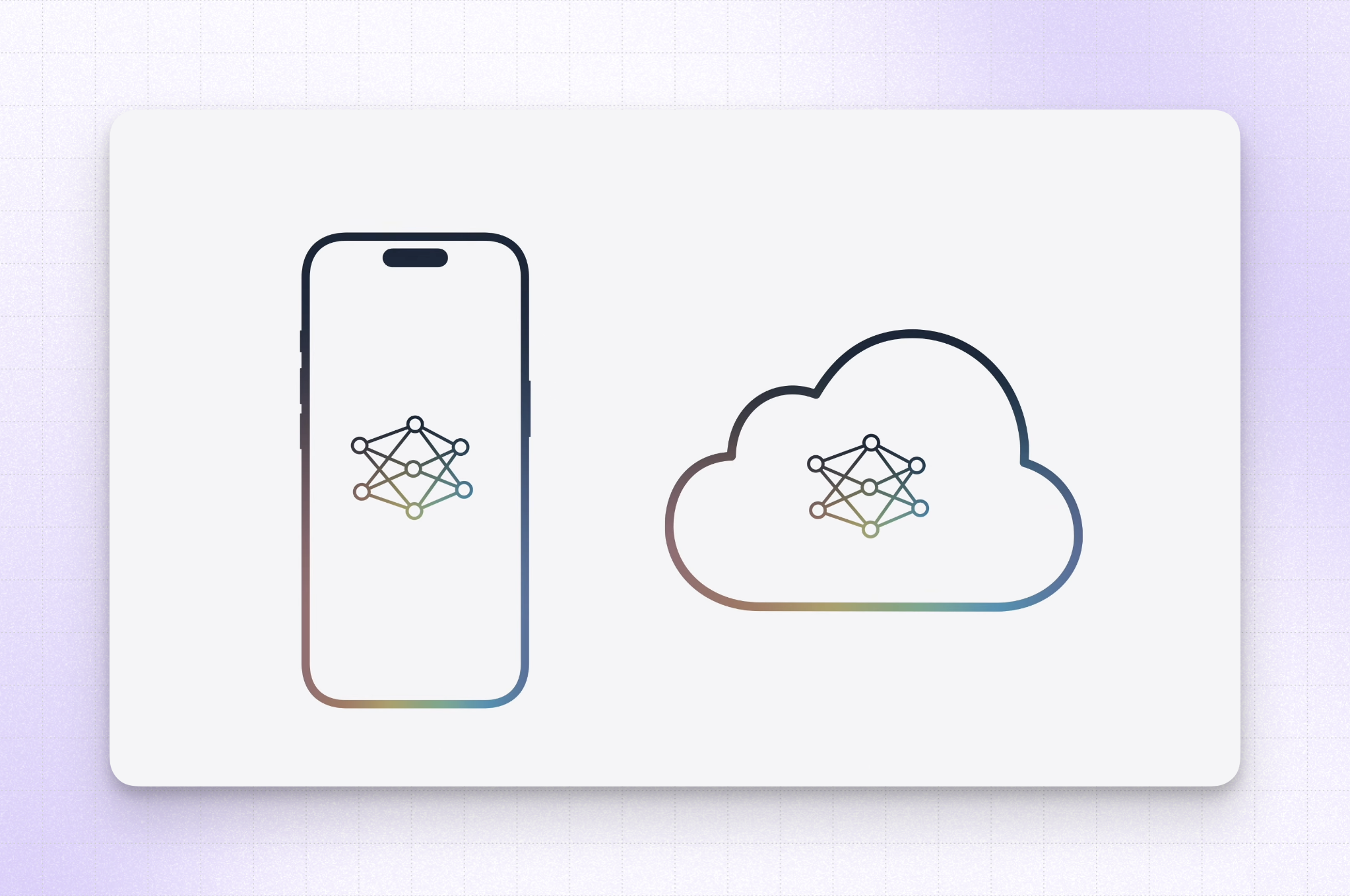
For app teams, this changes the boundary conditions. A feature can now be evaluated against device class, model availability, latency budget, privacy requirement, and acceptable error rate before it ever becomes a cloud decision.
The most powerful on-device model creates a new device boundary
Apple's upgraded models push Apple Intelligence into more visual and multimodal work: generating realistic images, editing photos, and answering questions about visual content.
The strongest on-device version goes further with speech generation and understanding, better dictation, stronger natural language understanding, and more expressive voices.
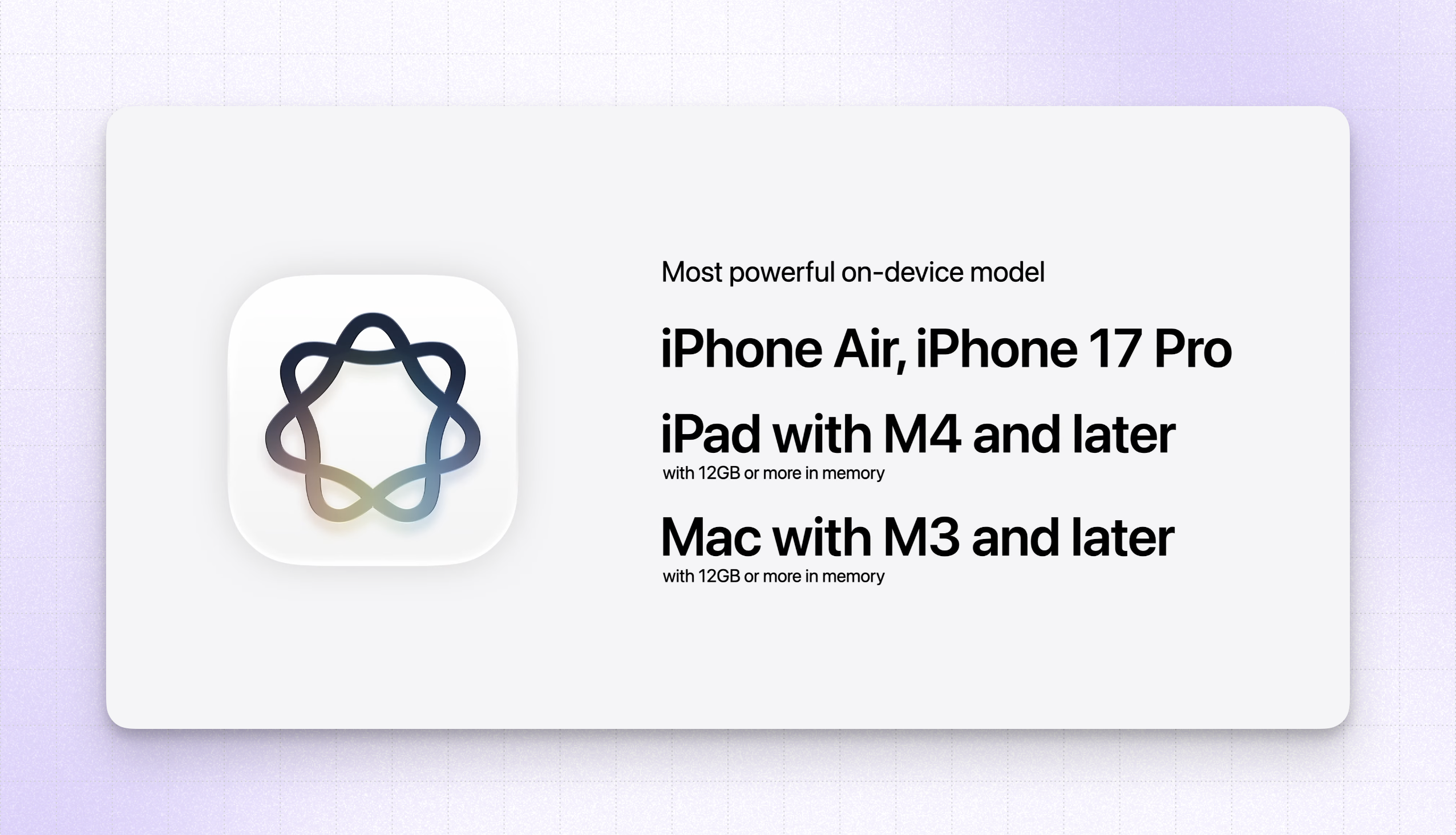
In practice, it means a feature may work fully on a newer iPhone, partially on another supported device, and through a server path when local capacity is not enough.
Foundation Models gets image input
In 2025, Foundation Models opened Apple's on-device language model to app developers. It was useful for text generation, extraction, summarization, guided generation, and tool calling. But it could not take an image as input.
At WWDC 2026, Apple said Foundation Models now supports images alongside text. The keynote example used a photo of an outfit: the model identified clothing items, then the app used its own product logic to recommend similar pieces.
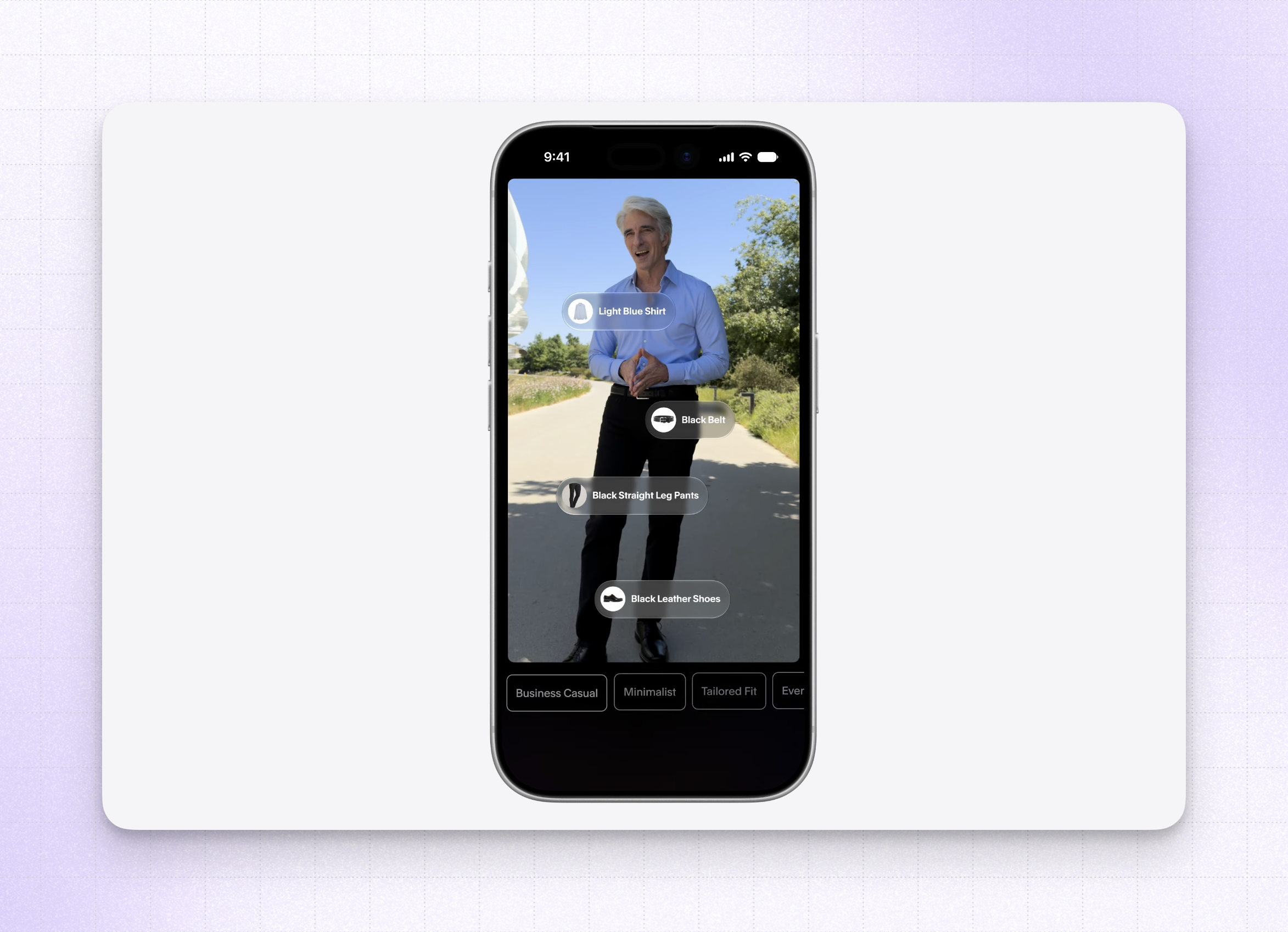
Thanks to recent update, the app does not need to ship a large vision-language model just to understand a private user-selected image, provided Apple's model is accurate enough for the use case.
Siri shows the orchestration layer
Apple described Siri AI as a system that combines personal context, App Actions, on-screen awareness, image understanding, and world knowledge. If your app exposes actions and content through the system, Siri has something to route to. If it does not, Apple Intelligence has less to work with, even when the model is stronger.
For developers, App Intents and Spotlight indexing become AI infrastructure. They decide whether your app can participate in system-level requests like "show me the quote from yesterday", "add this receipt to my expense report" or "use this image in the project brief".

Core AI is the native path for custom local inference
Foundation Models is Apple's model. Core AI is for your model. Until now, custom local inference on Apple platforms often meant using an external runtime. Core AI moves more of that work into the platform: local execution on Apple silicon, across Apple platforms, without making every app maintain its own inference layer.
Use Foundation Models when Apple's model fits the task. Use Core AI when the app needs specialized model such as a domain classifier, an embedding model or a specialized vision model.
What comes next for React Native
We are working on bringing these updates into the React Native AI stack. Expect package updates in the coming days as we map the new Apple APIs.
We'll also be working with customers and early users over the coming months to test all new capabilities in production.
If you want to follow the work or participate, watch the GitHub repository: callstackincubator/ai.

Learn more about AI
Here's everything we published recently on this topic.