How to Teach Your Own AI Model, Part 2: What Should You Build First?
How to Teach Your Own AI Model, Part 2: What Should You Build First?
Join Piotr Miłkowski and Kewin Wereszczyński on July 16 for a practical guide to training models, choosing APIs, and starting your first AI project.
How to Teach Your Own AI Model, Part 2: What Should You Build First?
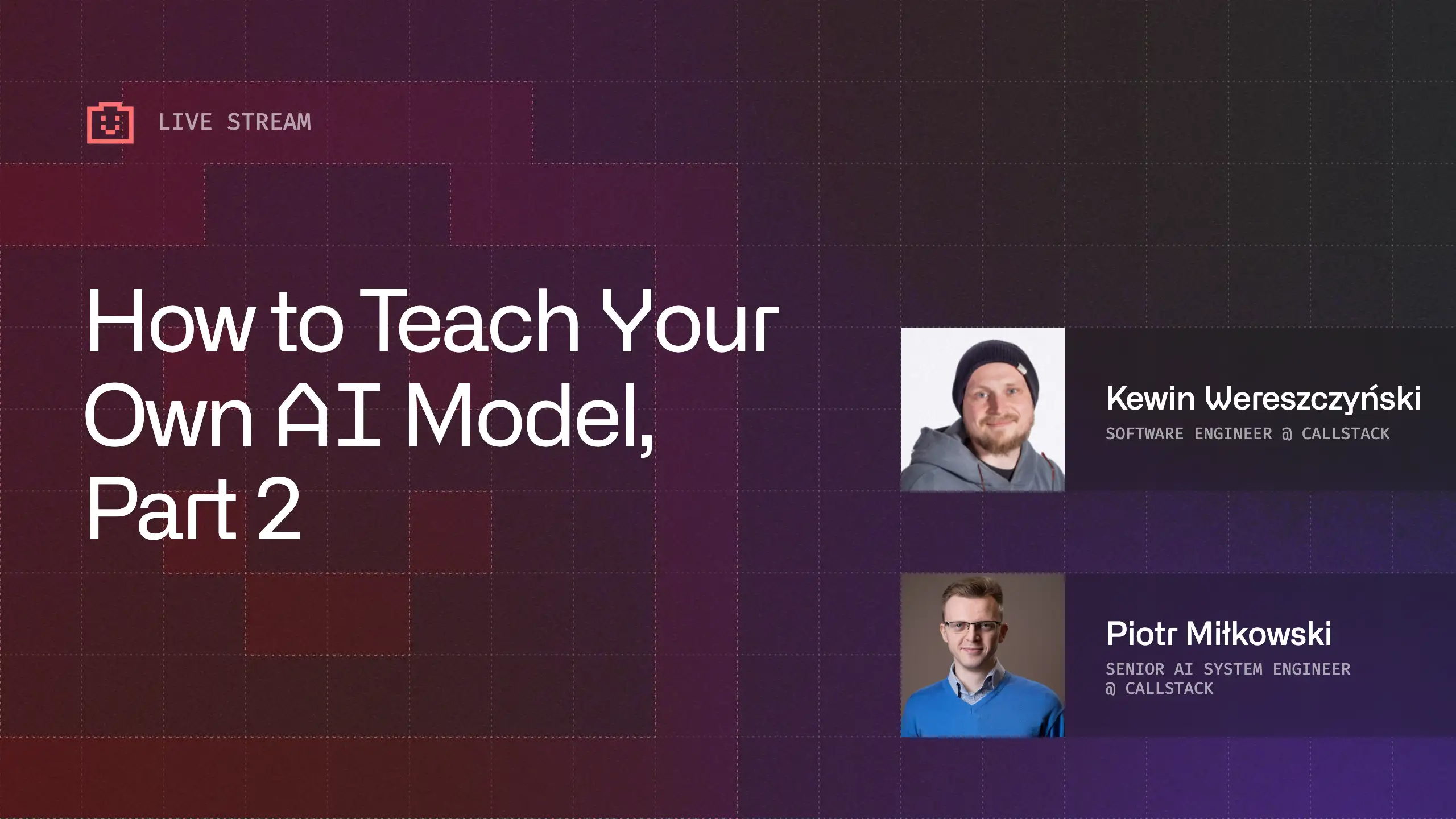



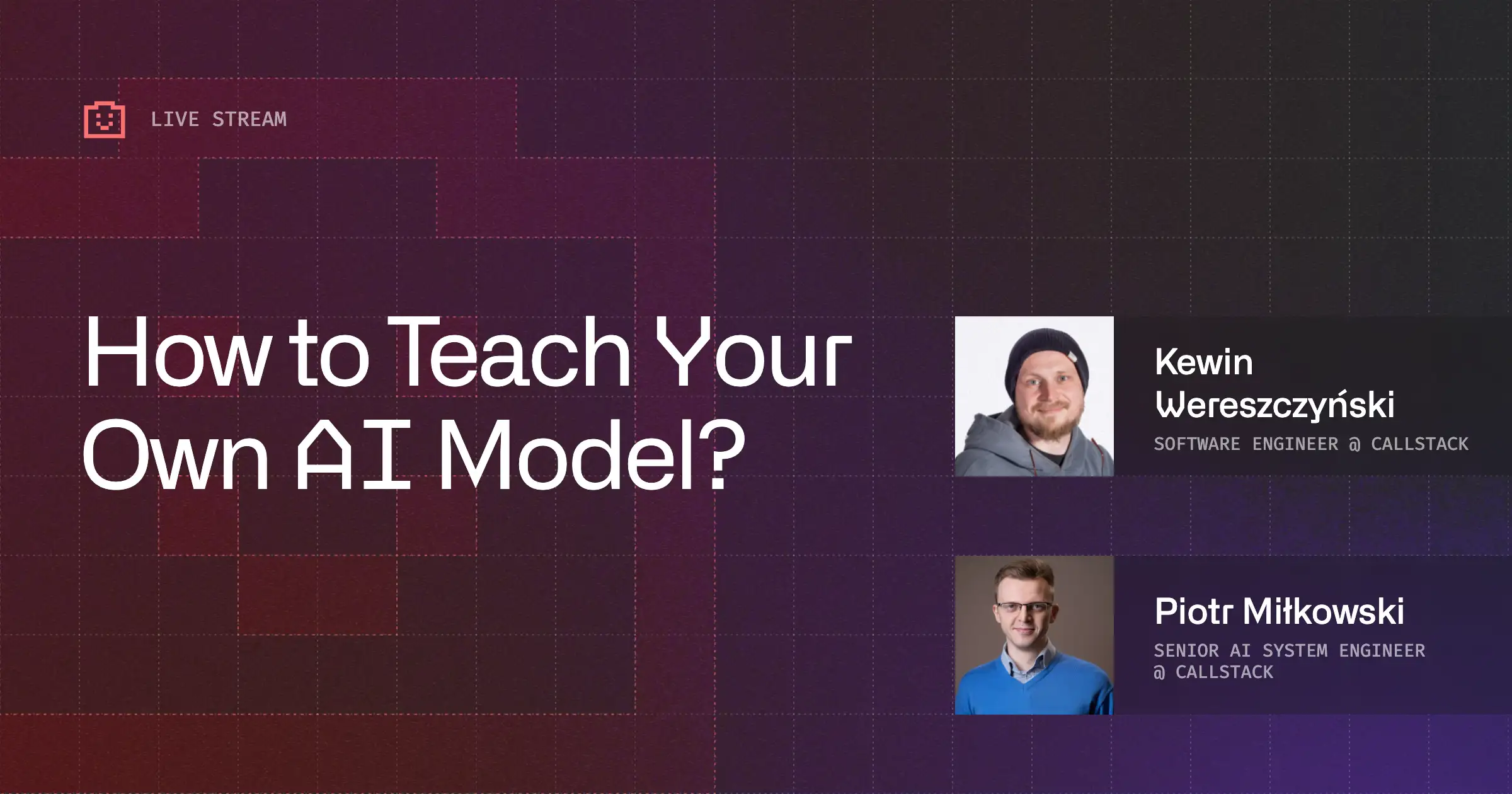
In the first part of “How to Teach Your Own AI Model,” we examined what happens beneath the surface of model training, from datasets and tokenization to alignment and inference. Now, Piotr Miłkowski returns to continue the conversation with host Kewin Wereszczyński, turning those foundations into practical guidance for developers.
Part 2 focuses on what you can realistically build and train today. Do you need millions of dollars? Is one GPU enough to learn something useful? Piotr and Kewin will discuss common beginner mistakes, the limits of training as an individual developer, and how to decide whether a project needs a custom model, fine-tuning, or an existing API.
The stream will also explore the changing role of training data. You will learn where synthetic data can help, why human-created data still matters, and whether the industry is approaching a shortage of useful material for training increasingly capable models.
Join us on Thursday, July 16, 2026, for a practical follow-up aimed at developers ready to move from understanding AI training to trying it themselves. You will leave with project ideas, clearer technical trade-offs, and one concrete experiment you can start with a weekend and a GPU.
How to Teach Your Own AI Model, Part 2: What Should You Build First?
Join Piotr Miłkowski and Kewin Wereszczyński on July 16 for a practical guide to training models, choosing APIs, and starting your first AI project.

Learn more about AI
Here's everything we published recently on this topic.









React Native Performance Optimization
Improve React Native apps speed and efficiency through targeted performance enhancements.
C++ Library Integration for React Native
Wrap existing C-compatible libraries for React Native with type-safe JavaScript APIs.
Shared Native Core for Cross-Platform Apps
Implement business logic once in C++ or Rust and run it across mobile, web, desktop, and TV.
Custom High-Performance Renderers
Build custom-rendered screens with WebGPU, Skia, or Filament for 60fps, 3D, and pixel-perfect UX.