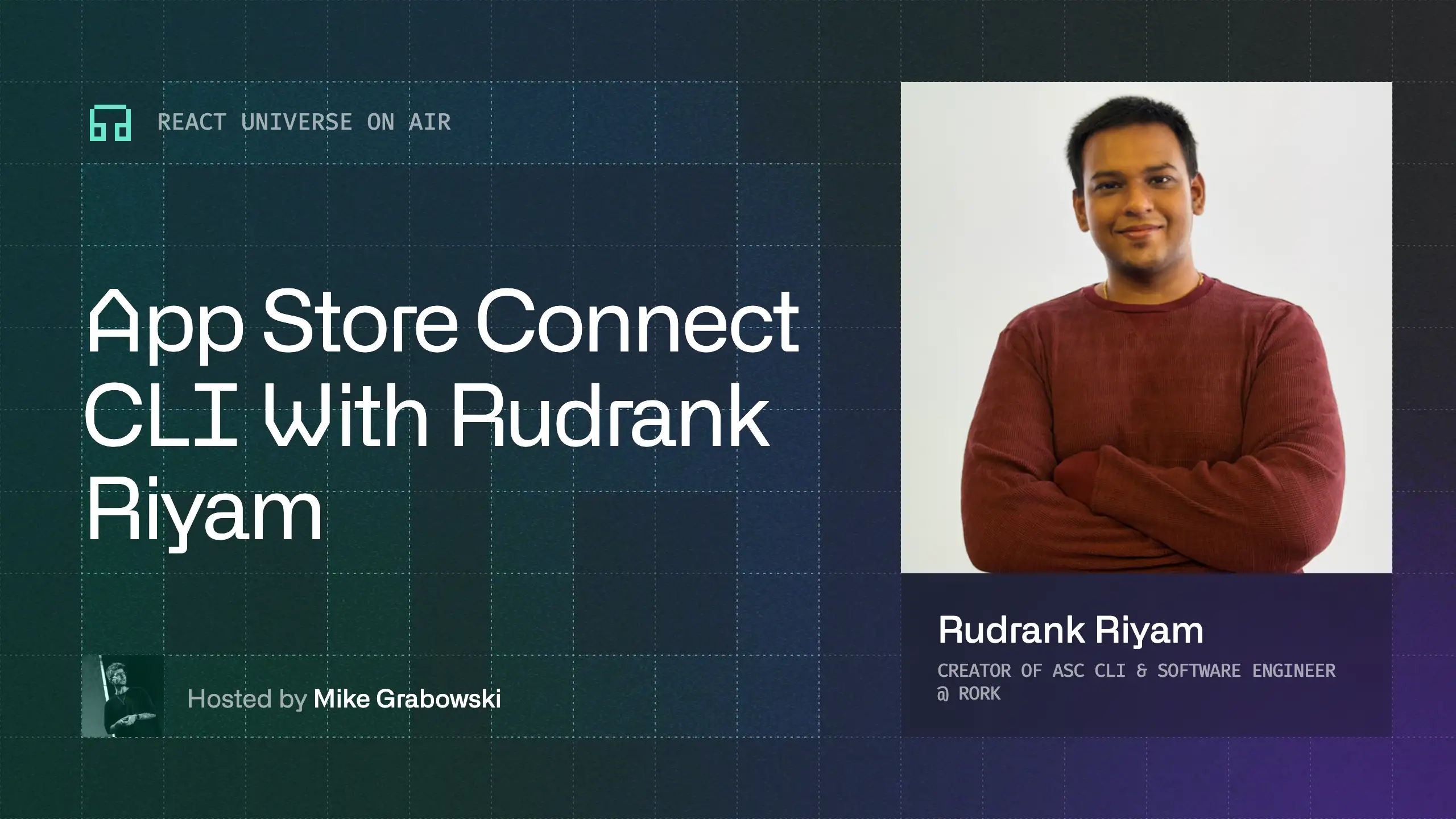


App Store Connect is not where most mobile developers want to spend their time. Rudrank Riyam built ASC CLI to move release work, metadata updates, feedback, analytics, and App Store workflows into a command-line interface that agents can use.
In this episode, Mike Grabowski talks with Rudrank about building a CLI “by agents and for agents,” why App Store automation still has rough edges, and how open-source tooling changes when the main user might be Codex, Cursor, or another coding agent rather than a person clicking through dashboards.
Rudrank Riyam is a software engineer at Roark and the creator of ASC CLI, an open-source command-line tool for automating App Store Connect workflows. The conversation covers the original TestFlight feedback pain point, the decision to write the CLI in Go, practical workflows such as localization and analytics, lessons from running many agents against one codebase, and what changed after Roark acquired the project while keeping it MIT-licensed and open source.
Why ASC CLI exists
ASC CLI started with a narrow problem: Rudrank wanted to fetch TestFlight feedback without opening App Store Connect, waiting on spinners, or going through Xcode. Fastlane did not cover the endpoint he needed, and the current wave of agentic tooling made a CLI a natural interface. From that first endpoint, the project grew into a broader App Store Connect automation layer that can help agents inspect metadata, screenshots, submissions, reviews, release state, and additional flows such as privacy fields and certificates.
Go, boring patterns, and agent-friendly code
Although Rudrank has spent much of his career writing Swift, ASC CLI is written in Go. The choice was practical: GitHub CLI offered a proven open-source reference architecture, Go is well suited to CLIs, and the coding agents Rudrank tested were more comfortable producing predictable Go than Swift. That “boring” quality mattered. A release automation CLI should be stable, explicit, and easy for both humans and agents to reason about.
From TestFlight feedback to full release workflows
The tool now supports workflows that go well beyond the first TestFlight feedback use case. Rudrank describes agents shipping an app by checking the latest submissions, identifying missing metadata and screenshots, and using App Store Connect API access to move through the release process. For indie developers, the biggest real-world use case has been localization: asking an agent to translate app titles, subtitles, descriptions, and keywords into multiple languages, then applying those changes without repeating App Store Connect UI work twenty times.
What agent-built projects teach about architecture
Rudrank pushed ASC CLI forward with multiple agents working in parallel, sometimes overnight. But that speed came with a cost: early commands and file structures became inconsistent because agents were solving separate parts without shared context. The project had to go through heavy deprecation and refactoring before the 1.0 release. His main takeaway: agents move faster when the codebase has clear modules, separate concerns, small files, and an agents.md that explains how work should be done.
Building for agents without forgetting developers
A recurring point in the episode is that patterns that help humans also help agents. Clean file structure, obvious command naming, discoverable modules, and reliable verification all reduce token waste and make contributions easier. That matters because many ASC CLI contributors are also using agents to open issues and pull requests. Rudrank even added an asc snitch command so an agent can report friction it encounters while using the CLI.
Open source after Roark
Roark first sponsored the project, then acquired it and hired Rudrank. He was clear that ASC CLI had to remain MIT-licensed and open source, and Roark agreed. The day-to-day work still looks community-driven: issues arrive, contributors send pull requests, Rudrank reviews and releases. Internally, Roark uses the CLI for app publishing workflows, while the wider community continues to shape the public tool.
Listen to the episode to learn how ASC CLI turns App Store Connect into an agent-readable interface for real app publishing workflows.
Resources
- Rudrank Riyam on Github, Linkedin, Linkedin and X
- Mike Grabowski on X, Linkedin and GitHub
- App Store Connect CLI
- Rudrank Riyam
- Rork
- React Universe On Air
Learn more about AI
React Native Wrapped 2025: A Month-by-Month Recap of The Year
The first edition of React Native Wrapped looks back at the year RN turned 10 and the ecosystem doubled down on the New Architecture. It provides a month-by-month record of 2025, covering major framework releases, the Legacy Architecture freeze, React 19 integration, and notable developments across tooling, performance, styling, native modules, Expo, and platform adoption.
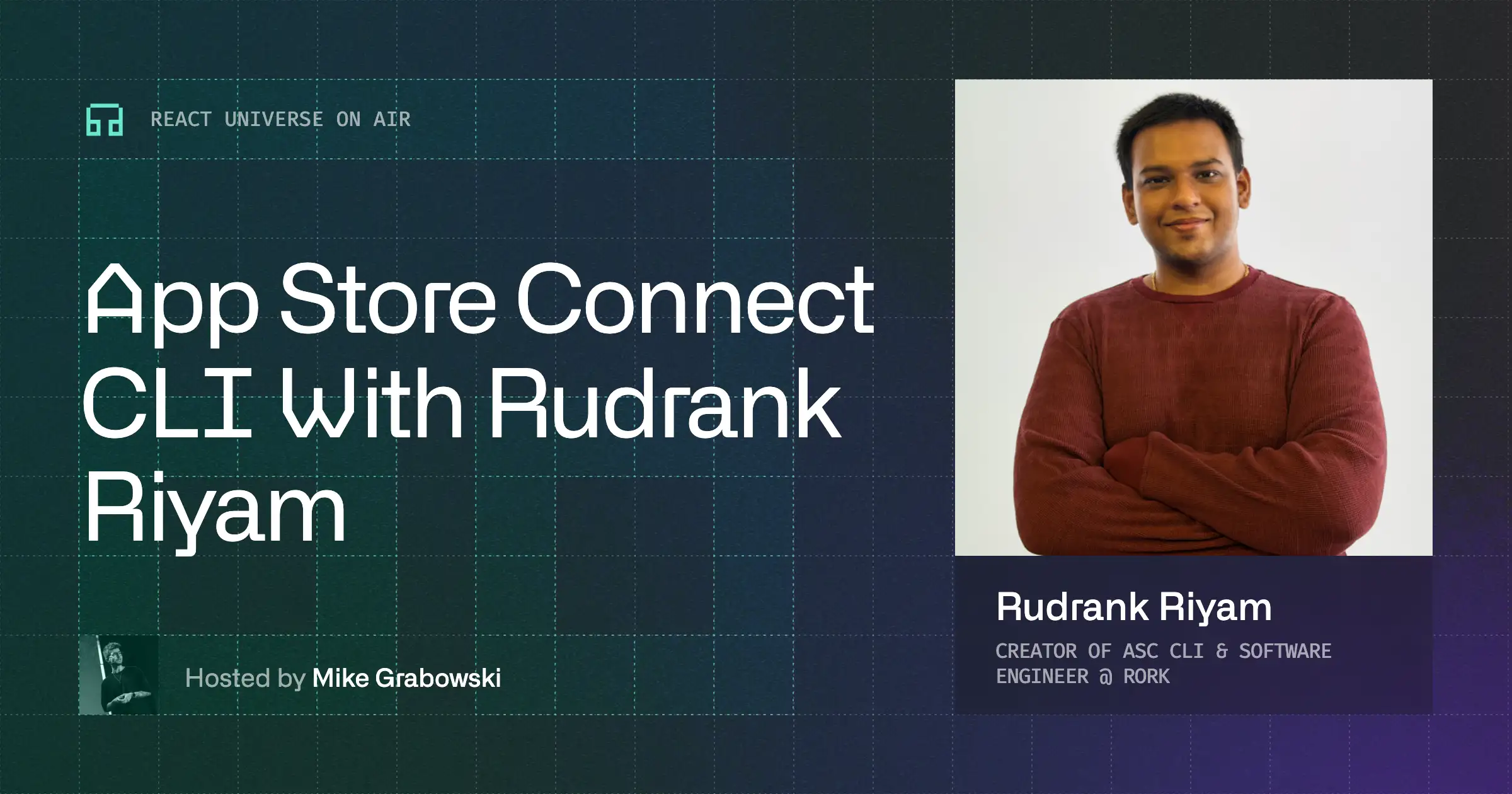
App Store Connect CLI, Agents, and Mobile Release Automation With Rudrank Riyam
Lorem ipsum dolor sit amet, consectetur adipiscing elit. Suspendisse varius enim in eros elementum tristique. Duis cursus, mi quis viverra ornare, eros dolor interdum nulla, ut commodo diam libero vitae erat. Aenean faucibus nibh et justo cursus id rutrum lorem imperdiet. Nunc ut sem vitae risus tristique posuere.

Agent Conf
Lorem ipsum dolor sit amet, consectetur adipiscing elit. Suspendisse varius enim in eros elementum tristique. Duis cursus, mi quis viverra ornare, eros dolor interdum nulla, ut commodo diam libero vitae erat. Aenean faucibus nibh et justo cursus id rutrum lorem imperdiet. Nunc ut sem vitae risus tristique posuere.
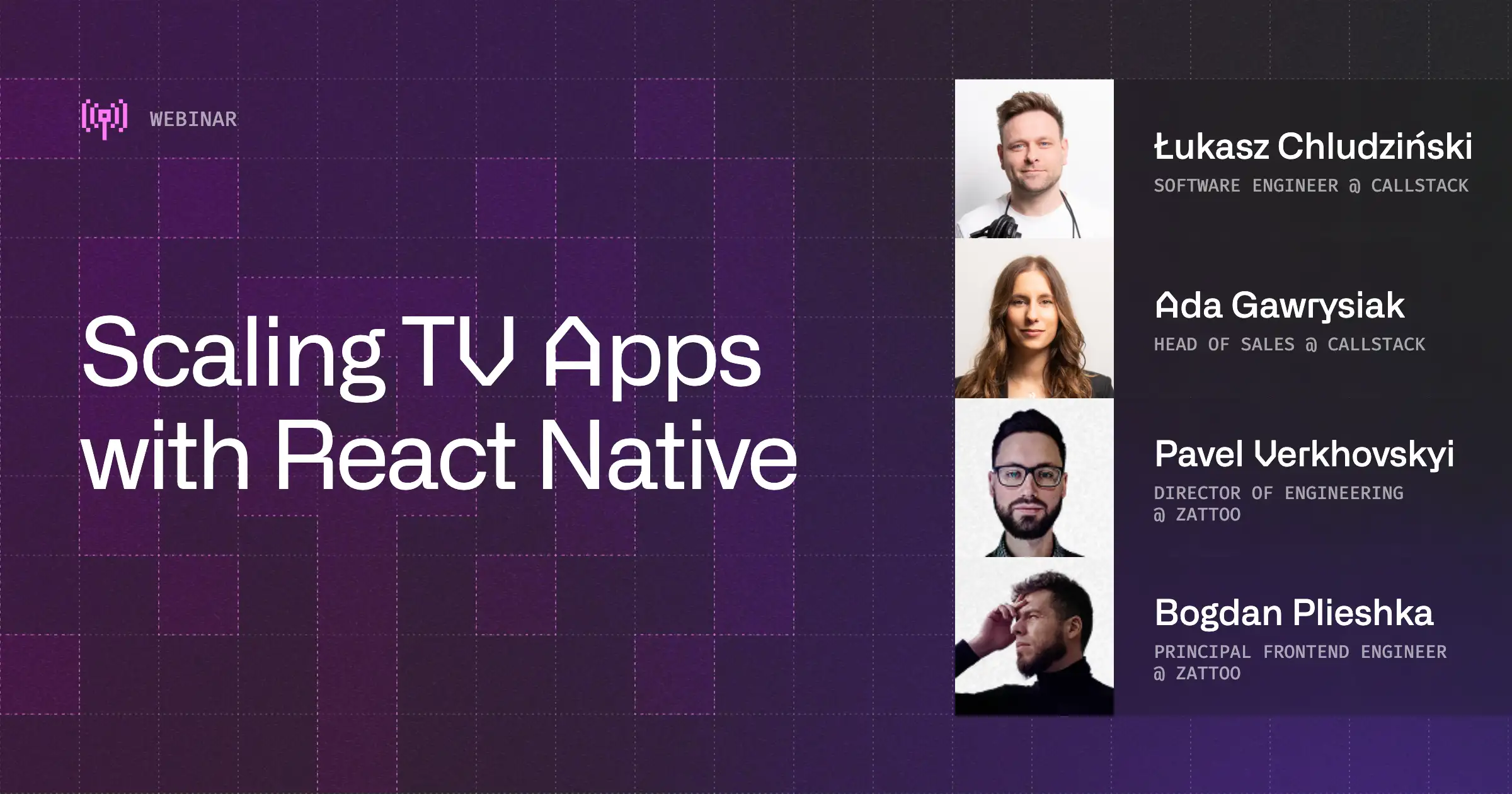
From Native to React Native for TV: The Zattoo Case
Lorem ipsum dolor sit amet, consectetur adipiscing elit. Suspendisse varius enim in eros elementum tristique. Duis cursus, mi quis viverra ornare, eros dolor interdum nulla, ut commodo diam libero vitae erat. Aenean faucibus nibh et justo cursus id rutrum lorem imperdiet. Nunc ut sem vitae risus tristique posuere.